It's Won or Lost Under the Floor
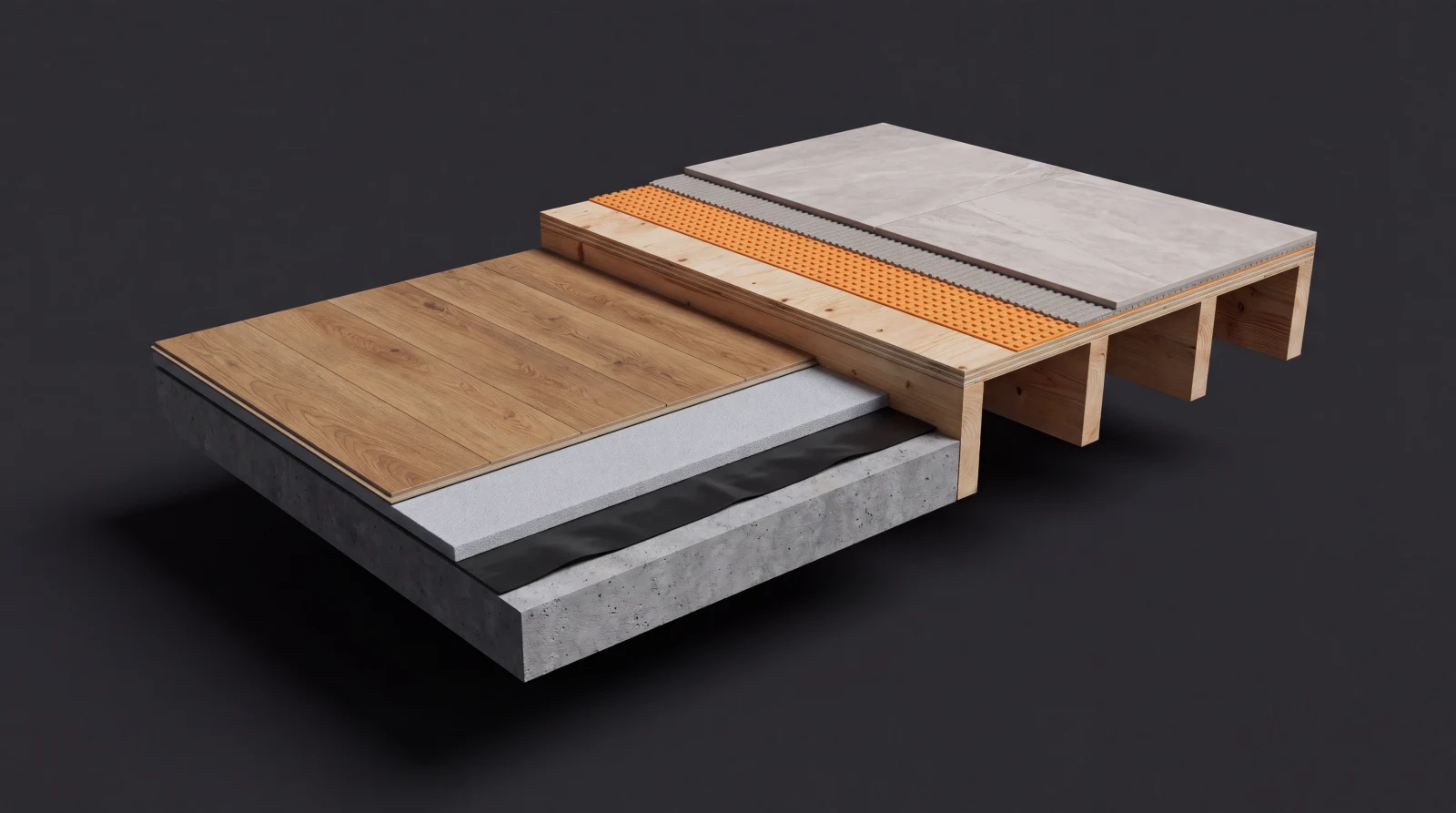
Luxury vinyl plank, engineered and solid hardwood, tile and carpet. We flatten the subfloor and moisture-test the slab before anything gets laid, because almost every flooring failure we're called to fix started underneath the finish material.
What's included
Most flooring quotes describe the product and skip the substrate. Ours describes both, because the substrate is what determines whether you're still happy with it in year five.
Moisture testing
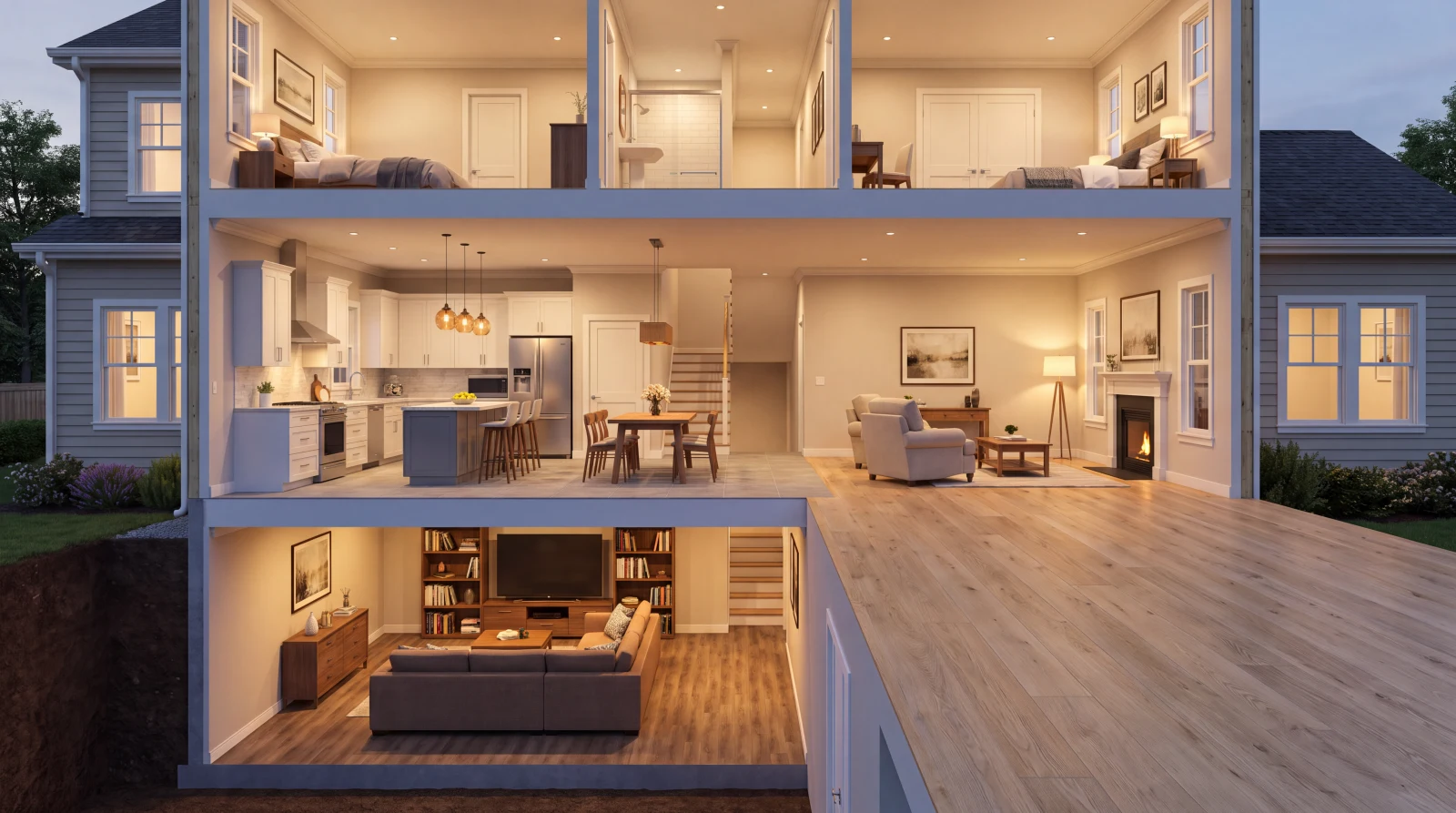
Concrete slabs tested for relative humidity before any material goes down. Wood subfloors checked with a meter. Manufacturers void warranties over moisture, and basements in Maryland are exactly where this bites.
Before anything is laidSubfloor flattening
Flattened to the manufacturer's tolerance - commonly 3/16" over 10 feet for click-together floors, and tighter for large-format tile. Self-leveler or sanding as the floor requires.
To manufacturer specSubfloor repair
Squeaks screwed down, soft or damaged sheathing replaced, loose panels re-fastened. You'll never get a quiet floor by laying something new on a loose one.
Correct underlayment
Vapor barrier over slabs, acoustic underlayment where a click floor needs it, uncoupling membrane or backer board under tile. Matched to the product and the room, not whatever was on the truck.
Demo and disposal
Old flooring, tack strip, staples and adhesive removed and hauled away. Adhesive residue matters - a new floating floor over old glue ridges telegraphs every one of them.
Layout planned
Plank direction, starting wall and seam placement planned so you don't end up with a two-inch sliver at the most visible edge of the room. Tile dry-laid before it's set.
Transitions and trim
Thresholds, reducers, stair nosing, and quarter round or reinstalled base. Transitions are the detail that makes an install look professional or homemade.
Acclimation
Wood products delivered and acclimated in the actual room before installation. Skipping this is why hardwood gaps in winter and cups in August.
Flooring options, honestly compared
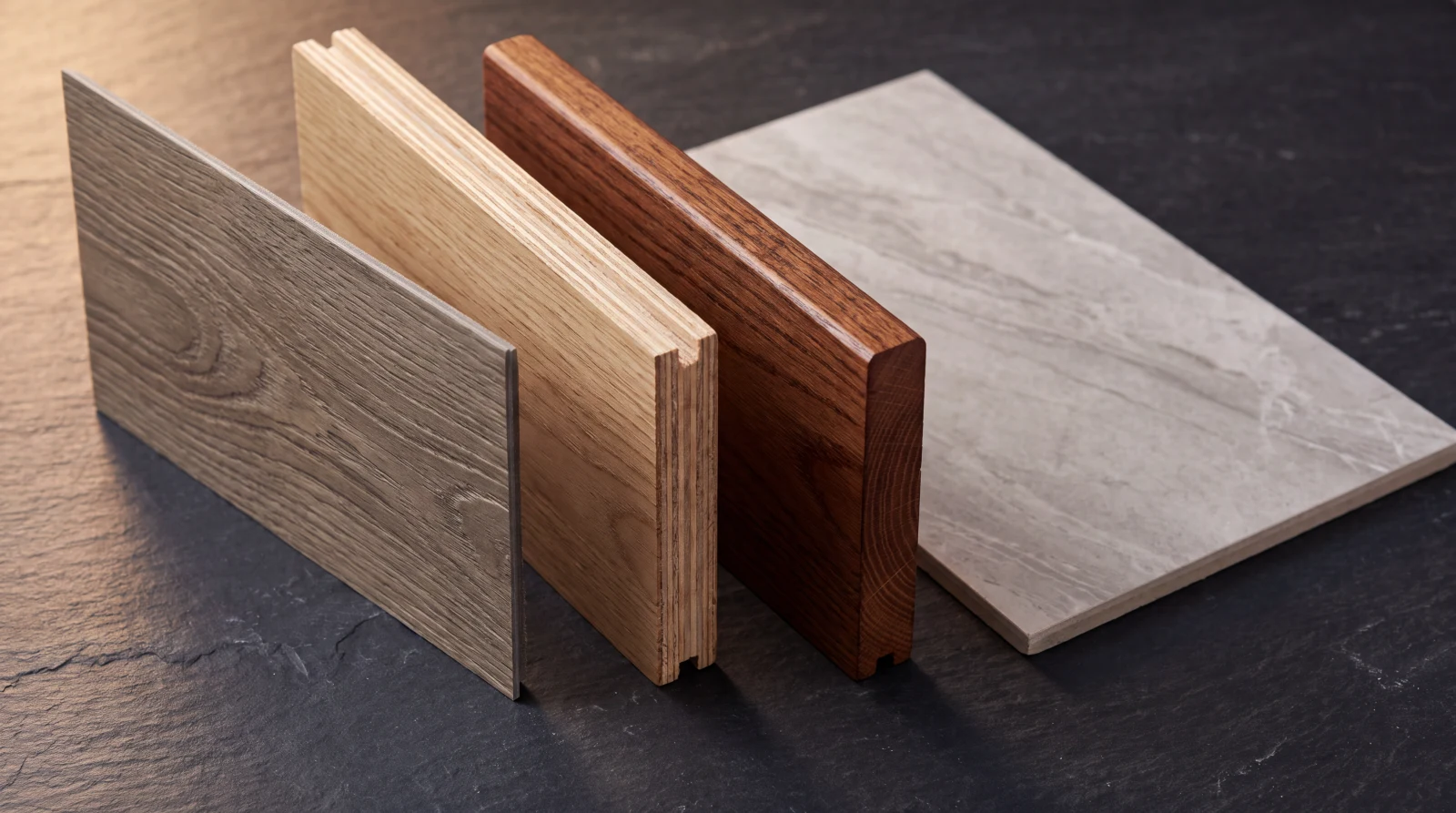
Every material here is one we'll install. The differences that matter are moisture tolerance, whether it can ever be refinished, and how it behaves in a basement.
| Material | Installed range | Wet areas / basement | Honest take |
|---|---|---|---|
| Luxury vinyl plank (LVP) | $6-$12 / sq ft | Yes, including below grade | The default for most of the houses we work in. Waterproof, tough with dogs and kids, quiet underfoot with the right underlayment. It cannot be refinished, so wear means replacement. |
| Engineered hardwood | $9-$16 / sq ft | Above grade, and slabs with a vapor barrier | Real wood veneer over a stable core. Handles our humidity swings far better than solid, and can usually be refinished once or twice depending on wear-layer thickness. |
| Solid hardwood | $10-$18 / sq ft | No basements, no full baths | The one that can be refinished repeatedly and the one that adds most at resale. It moves with seasonal humidity, so it needs acclimation and expansion gaps done right. |
| Porcelain / ceramic tile | $12-$25 / sq ft | Yes, anywhere | The most durable and the most substrate-sensitive. Large-format tile over a floor that wasn't flattened gives you lippage and, eventually, cracked grout lines. |
| Carpet | $4-$9 / sq ft | Not recommended below grade | Still the right answer for bedrooms and stairs. Pad quality drives how it feels and how long it lasts more than the carpet itself does. |
| Stair installation | $65-$150 / stair | - | Priced per tread rather than by area. Stairs are slow, precise work and any quote that folds them into the square-foot number is hiding something. |
Ranges are Maryland installed pricing for July 2026 including standard prep, demo and disposal. Significant self-leveling, subfloor replacement, or heavy old adhesive removal are quoted as separate lines so you can see them.
Where flooring installs actually fail
We rarely get called because someone chose the wrong plank. We get called because of what was or wasn't done to the floor underneath it.
What a cheap bid leaves out
- New floor laid over an unflattened subfloor
- No moisture test on a basement or slab-on-grade
- Floating floor installed with no expansion gap at the walls
- No vapor barrier between concrete and the finish floor
- Old adhesive ridges left in place
- Wood delivered and installed the same day, never acclimated
- Large-format tile set without checking flatness, so tiles lip
- Transitions left as a surface-nailed afterthought
What is in ours
- Subfloor flattened to the manufacturer's stated tolerance
- Slab RH tested and documented before material is ordered
- Expansion gaps set correctly and hidden by base or quarter round
- Vapor barrier over every below-grade or on-grade slab
- Adhesive and old fasteners fully removed
- Wood acclimated in the room before it's installed
- Tile substrate flattened and dry-laid before it's set
- Transitions, reducers and stair nosing planned into the layout
How it goes
Most flooring jobs are two to five days on site. The order below is what keeps them that short.
Free measure and floor check
We measure, pull a vent or a corner to see what's under the existing floor, and moisture-test slabs. What's underneath decides which products are even on the table.
Product selection
We bring samples to the house so you see them in your own light next to your own cabinets. We'll also tell you plainly which options we would not put in that particular room.
Fixed written quote
Material, underlayment, prep, demo, disposal, transitions and stairs, each on its own line. Nothing folded into a single square-foot number.
Delivery and acclimation
Material delivered ahead of installation where the product requires acclimation, and stored in the room it's going into rather than in the garage.
Demo and subfloor prep
Old floor out, fasteners and adhesive removed, squeaks fixed, floor flattened and moisture barrier installed. This stage is the whole job.
Install, trim and walkthrough
Layout set, floor installed, transitions and base finished, site cleaned. We walk it with you and hand over the 10-year workmanship warranty.
Most whole-floor projects we do land between $3,500 and $22,000 depending on square footage and material. A typical 800 to 1,200 square foot main level in LVP usually runs $7,000 to $14,000 installed with prep included.
Your quote is a fixed written price, not an hourly estimate. It does not move unless you change the scope in writing.
What moves the number
Subfloor condition
A flat, sound subfloor needs almost nothing. One that needs self-leveler or sheathing replacement can add several dollars a square foot before the finish floor is even opened.
Material choice
The spread between LVP and tile is roughly double, and the installation labor spread is wider than the material spread.
Layout complexity
Open rectangles are fast. Closets, angles, transitions between rooms, and anything set on a diagonal or in a herringbone pattern add real hours.
Stairs
Priced per tread, and always slower than people expect. A staircase can easily equal a whole room in cost.
Where we work
We install flooring across central Maryland. We keep the radius tight on purpose - a crew that can get back to you in a day is worth more than a company that covers the whole state and takes three weeks to return a warranty call.
Carroll County
Westminster · Eldersburg · Sykesville · Mount Airy · Hampstead · Manchester · Finksburg
Howard County
Ellicott City · Columbia · Clarksville · Fulton · Marriottsville · Glenelg
Baltimore County
Owings Mills · Reisterstown · Towson · Cockeysville · Pikesville · Catonsville
Montgomery County
Damascus · Clarksburg · Germantown · Gaithersburg · Rockville · Olney
Frederick County
Frederick · Urbana · New Market · Ijamsville · Mount Airy
Anne Arundel County
Severna Park · Crofton · Gambrills · Millersville · Arnold · Annapolis
The warranty, and what it actually means
Ten years on our workmanship, in writing, on every job. Not a marketing line - a document you keep.
Ten years, in writing
You get the warranty on paper at the final walkthrough, with the scope it covers spelled out. No verbal promises, nothing that expires when a salesman leaves.
It is why we take whole jobs
A warranty only means something when one company controlled the whole assembly. If half the work was somebody else's, nobody can honestly stand behind the result - so we don't split scopes.
The reserve is inside the price
Money for warranty callbacks is built into every quote before you see it. A contractor priced so thin that a callback hurts is a contractor who will argue with you in year three.
Manufacturer coverage on top
Materials carry their own manufacturer warranty, and we register it in your name where the manufacturer requires it. Two separate protections, not one.
Licensed and insured
MHIC #108556, general liability and workers' comp current. Certificates go to you before we start, not after you ask.
Financing if you want it
Approved financing is available through our lending partners, with options across a wide range of credit profiles. Check your rate in about a minute - a soft pull that doesn't affect your score.
Ask about monthly plansQuestions we get asked
Can I put hardwood in my basement?
Solid hardwood, no. Below-grade concrete moves moisture upward year round and solid wood will cup or gap. Engineered hardwood over a proper vapor barrier can work in a dry, tested basement, and LVP is the safe answer that we recommend most often.
Do I have to remove the old floor?
Almost always yes. Installing over an existing floor hides subfloor problems, raises the finished height enough to cause door and appliance clearance issues, and voids most manufacturer warranties.
How flat does the subfloor have to be?
It depends on the product, and it is stricter than most people expect. Click-together floors typically want about 3/16 of an inch over 10 feet, and large-format tile is tighter still. We measure it rather than eyeballing it.
How long does installation take?
Two to five days for most projects. Add a day if the subfloor needs self-leveler, which has to cure before anything goes on top of it.
Can you match my existing floor?
Sometimes. Wood species, stain and plank width can often be matched closely; exact discontinued products usually can't. Where a seamless match isn't possible we'll suggest a clean transition rather than a mismatch that draws the eye.
Do you move furniture?
Yes, standard furniture is included. Pianos, safes, large aquariums and anything requiring specialty handling we'll flag and quote separately.
What about my appliances and toe kicks?
Appliances get pulled and reset. Whether flooring runs under the cabinets or stops at the toe kick is a decision we make with you before we start, because it affects future replacement.
What does the warranty cover?
Ten years on our installation - lifting, gapping, hollow spots or failures traceable to prep and workmanship. The material itself carries the manufacturer's own warranty, which we register in your name where required.
Get Your Free Flooring Estimate
Free on-site consultation · fixed written proposal · no pressure and no sales visit that turns into two hours.
Prefer to talk? Call or text (443) 540-7985